Sleep
Resetting your sleep cycle (with TCM)
To reset your sleep cycle, wake at the same time every day, get daylight soon after waking, and dim lights and screens in the evening. Many people notice a change within one to two weeks of doing this consistently. Traditional Chinese Medicine adds the organ clock, which links regular night waking to particular organ systems, and acupuncture may help when stress keeps you awake.
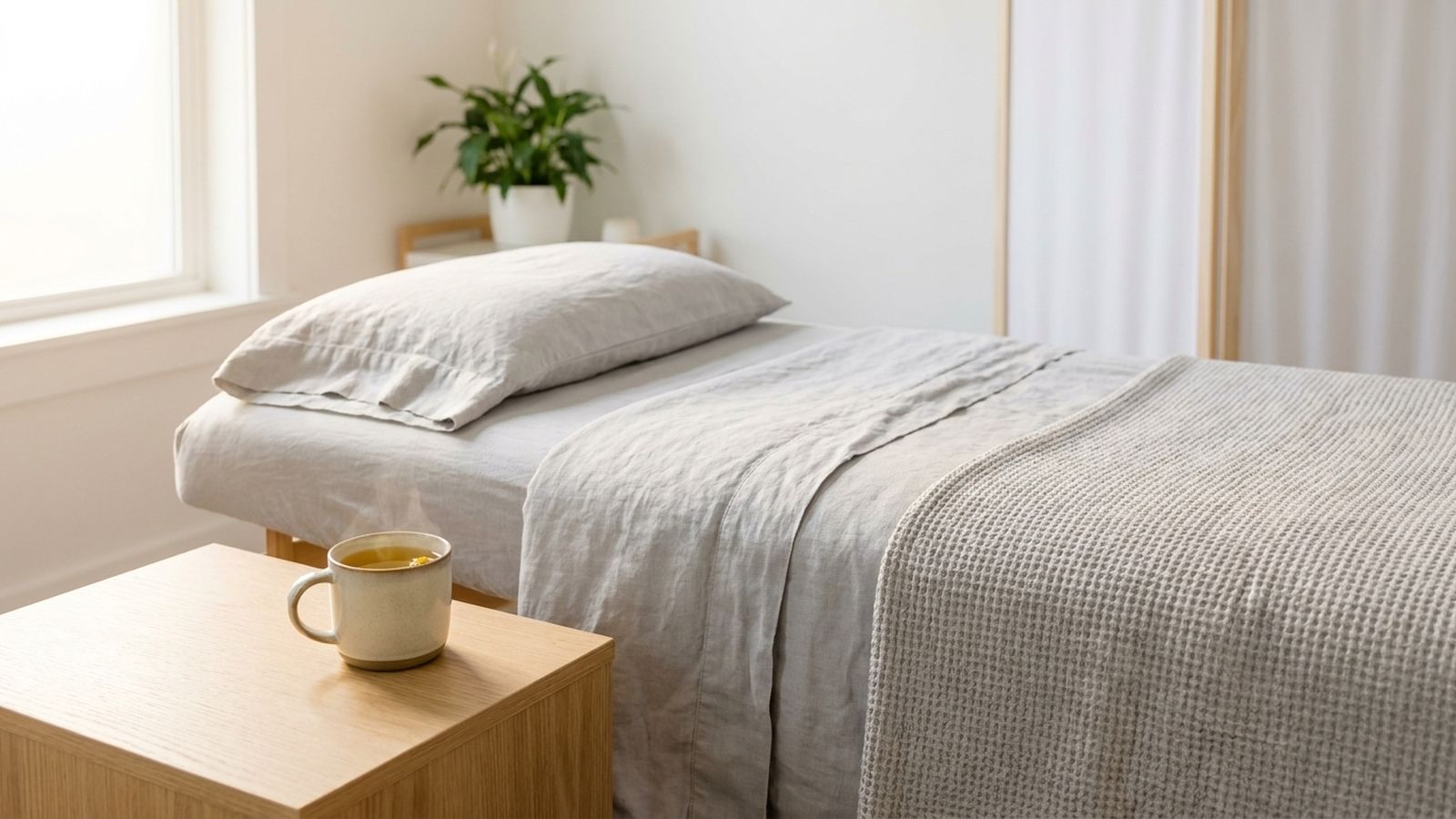
How do you reset your sleep cycle?
These steps are a good place to start:
- Keep a consistent sleep and wake time, including on weekends. A fixed wake time is the most important anchor.
- Get morning daylight. Spend 5 to 20 minutes outside soon after waking.
- Create a relaxing bedtime routine, such as gentle yoga, meditation, reading or a warm bath.
- Keep the TV out of the bedroom, and avoid falling asleep on the couch.
- Limit screens for 2 hours before bed. The blue light from screens tells the brain it should be awake.
- If you must use screens in the evening, turn on a warm-light setting: Night Shift on iPhone and Mac, Night Light on Windows and on many Android phones, or a free program such as f.lux.
- Dim the lights in the evening. Switch off bright overhead lights and use lamps instead.
- Limit caffeine after lunch. Coffee, black and green tea, energy drinks and chocolate all count.
- Keep the bedroom dark, tidy, quiet and cool.
- Be patient. It can take a few weeks for a new sleep schedule to settle.
Talk to your doctor if you snore loudly or stop breathing in your sleep, if you fall asleep during the day without meaning to, or if poor sleep comes with low mood. Conditions such as sleep apnea and depression need medical care.
Why does the body clock matter?
Western science calls the daily cycle the circadian rhythm, the body's internal clock. A small area in the brain keeps time, and it is reset each day mainly by light reaching the eyes. Morning light sets the clock; evening darkness lets the hormone melatonin rise and prepare us for sleep.
Shift work, late screens, irregular meals and little time outdoors keep sending the clock mixed signals. Some research links long-term disruption with weight gain, metabolic problems, heart disease and mood problems. Long-term poor sleep is also associated with poorer memory and concentration and weaker immune function. If sleep problems are your main concern, our article on insomnia and acupuncture goes into more detail.
What does TCM say about sleep?
Traditional Chinese Medicine (TCM) describes the body's daily rhythm through the organ clock, sometimes called the meridian clock. It divides the day into two-hour periods, each linked with an organ system that is most active at that time. In TCM, when this flow is disrupted, sleep is often one of the first places it shows.
The night-time part of the clock is the one most relevant to sleep:
- 9 to 11 pm, Triple Burner: the body winds down; a good time to be heading to bed.
- 11 pm to 1 am, Gallbladder: associated with rest and renewal.
- 1 to 3 am, Liver: associated with cleansing and storing the blood. Regular waking at this time is often linked with stress, frustration or alcohol in TCM.
- 3 to 5 am, Lungs: associated with breathing and, emotionally, with grief.
From the TCM point of view, the most restorative hours for sleep are between 11 pm and 5 am. This fits with the natural rise and fall of melatonin as the sun sets and rises.
Adjust the schedule to fit your life if you need to. A consistent routine matters most. When a pattern of waking keeps repeating, a TCM assessment, including pulse diagnosis, looks at which pattern may be behind it.
Can acupuncture help you sleep?
It may. Acupuncture is often used for sleep problems linked with stress and a racing mind, and research on acupuncture for insomnia is growing. Chinese herbal formulas may be added according to your TCM pattern. Stress is one of the most common reasons we see for poor sleep; see our page on acupuncture for anxiety and stress.
Acupuncture with sterile, single-use needles is generally low-risk. If you take sleep medication or anything for mood or anxiety, keep taking it as prescribed and speak to your doctor before making changes.
Your first visit with Dalibor Covic, R.TCMP, is an initial examination ($110, about 60 minutes), including a pulse assessment, followed by your first acupuncture treatment ($120). For more on how we work with sleep, see acupuncture for stress and sleep in Mississauga. If you would like help, you can book a first visit or email info@aculosophy.com.
Common questions
How long does it take to reset a sleep schedule?
It varies. Many people notice a change within one to two weeks of consistent wake times and morning light, but a long-standing pattern can take longer. Consistency matters more than any single change.
What does it mean if I keep waking at the same time every night?
In TCM, waking at a regular time is linked to the organ system active in that period of the organ clock, for example 1 to 3 am with the Liver. It is one clue we consider in your assessment, along with your pulse and other symptoms.
This page is general information, not medical advice. Acupuncture works alongside the care you get from your family doctor. If your symptoms are new, severe or getting worse, see your doctor first.
New patients